
How LLMs Are Changing the Way Software Is Built
LLMs are transforming how software is built by speeding up development, improving productivity, and reshaping engineering workflows. Here is how they are changing modern software development.
Keshav Gambhir
3/9/20264 min read
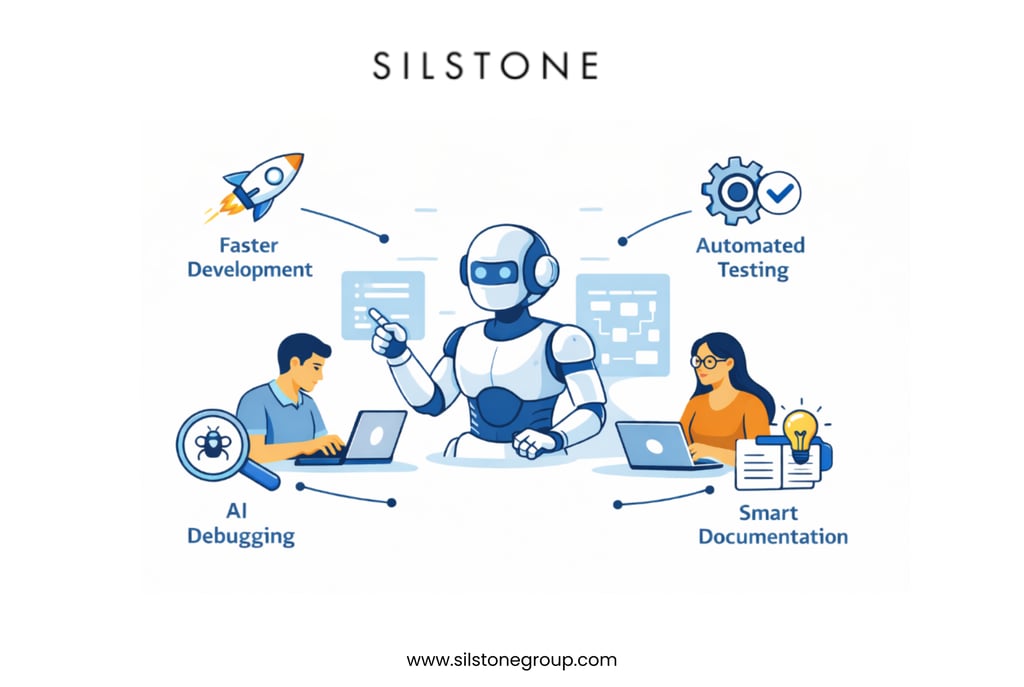
Software development is going through one of the biggest transformations since the introduction of cloud computing. Large Language Models, commonly known as LLMs, are reshaping how developers write code, design systems, test applications, and build products.
Instead of replacing engineers, LLMs are changing the way software teams operate. They are becoming powerful assistants that help developers move faster, explore solutions quickly, and automate many parts of the development lifecycle.
The result is a new software development paradigm where human expertise and AI capabilities work together.
This shift is already visible across startups, enterprise engineering teams, and product companies worldwide.
The Rise of AI Assisted Development
LLMs have rapidly become part of the modern developer workflow. Tools powered by large language models can generate code snippets, explain complex functions, suggest architecture patterns, and help developers debug errors.
According to GitHub research, developers using AI coding assistants complete tasks up to 55 percent faster compared to traditional workflows. Another survey from Stack Overflow found that more than 70 percent of developers are already using or planning to use AI tools in their development process.
This does not mean developers are becoming less important. Instead, the role of developers is shifting from simply writing code to designing systems, validating logic, and making architectural decisions.
The core value is moving from typing code to engineering intelligent systems.
Faster Prototyping and MVP Development
One of the biggest changes LLMs bring to software development is speed.
Previously, building a prototype required significant engineering effort. Teams had to manually write boilerplate code, set up infrastructure, and spend weeks getting a working prototype ready.
With LLM powered tools, developers can generate initial code structures in minutes. APIs can be integrated faster, basic UI components can be generated quickly, and early product concepts can be tested rapidly.
This allows startups to validate ideas much faster than before. According to a McKinsey report, generative AI could increase developer productivity by up to 30 to 45 percent across the software development lifecycle.
Faster prototyping means companies can test more ideas and reach product market fit sooner.
Changing the Role of Software Engineers
LLMs are not eliminating the need for software engineers. Instead, they are elevating the role of engineering.
Developers now spend less time writing repetitive code and more time solving complex problems.
Engineers are focusing more on system architecture, performance optimization, security design, and product thinking. AI can generate code, but it cannot fully understand the broader context of a business problem, long term scalability requirements, or the tradeoffs between different architectural choices.
This is why experienced engineers remain critical. Human judgment is still required to review AI generated outputs, ensure reliability, and maintain high quality software systems.
In many ways, LLMs act like a junior developer that works extremely fast but still needs supervision.
Improved Debugging and Code Understanding
Another major impact of LLMs is in debugging and code comprehension.
Modern software systems are often large and complex. Understanding legacy codebases or identifying the source of bugs can take significant time.
LLM powered tools can analyze code quickly and explain how different parts of a system interact. Developers can ask questions about unfamiliar codebases and receive explanations instantly.
This helps teams onboard new developers faster and reduces the time spent diagnosing technical issues.
AI powered debugging also helps engineers identify potential performance bottlenecks or security vulnerabilities earlier in the development cycle.
Better Documentation and Knowledge Sharing
Documentation has traditionally been one of the most neglected parts of software development.
Many teams struggle with outdated documentation, missing technical notes, or poor knowledge transfer between engineers.
LLMs are improving this area significantly. They can automatically generate documentation for APIs, explain code functions, and summarize technical systems.
This helps teams maintain better knowledge management and makes it easier for new developers to understand existing systems.
According to a survey by Atlassian, teams spend nearly 20 percent of their workweek searching for information or documentation. AI generated documentation can reduce this friction and improve collaboration across engineering teams.
Accelerating Software Testing
Testing is another area where LLMs are having a meaningful impact.
Developers can now generate test cases automatically based on the logic of their code. AI tools can analyze application behavior and suggest edge cases that developers might overlook.
Automated test generation helps improve software reliability while reducing the manual effort required from QA teams.
This leads to faster development cycles and more stable software releases.
As companies adopt continuous deployment models, AI assisted testing becomes increasingly valuable.
The Limits of LLMs in Software Development
Despite their advantages, LLMs still have limitations.
AI models can generate incorrect code, misunderstand context, or introduce subtle bugs that are difficult to detect. They also lack deep awareness of business requirements, regulatory constraints, and product strategy.
Building production grade software still requires experienced engineers who understand system architecture, scalability, and security.
LLMs should be seen as productivity tools rather than autonomous developers.
The most effective teams combine AI assistance with strong engineering expertise.
A New Era of Human AI Collaboration
The future of software development is not human versus AI. It is human plus AI.
Developers who learn how to work effectively with AI tools will be able to build products faster and solve problems more efficiently.
At the same time, companies will increasingly value engineers who understand architecture, product design, and system thinking.
Software development is evolving from a purely coding focused activity to a broader discipline that combines engineering judgment, product strategy, and intelligent automation.
LLMs are simply accelerating that transition.
How Silstone Group Helps Companies Build Modern Software
At Silstone Group, we work with startups and companies that are building serious software products. Our team combines experienced engineers with modern AI assisted development workflows to help organizations design, build, and scale their technology.
We help companies move from idea to production while ensuring that their systems are reliable, scalable, and built for long term growth.
Whether it is building custom software platforms, integrating AI capabilities into existing products, or developing healthcare technology solutions, Silstone Group focuses on creating software that works in the real world.
AI tools can accelerate development, but strong engineering foundations are what turn ideas into successful products.
That is where the right technology partner makes the difference.
Contacts
+1 613 558 5913
sales@silstonegroup.com